
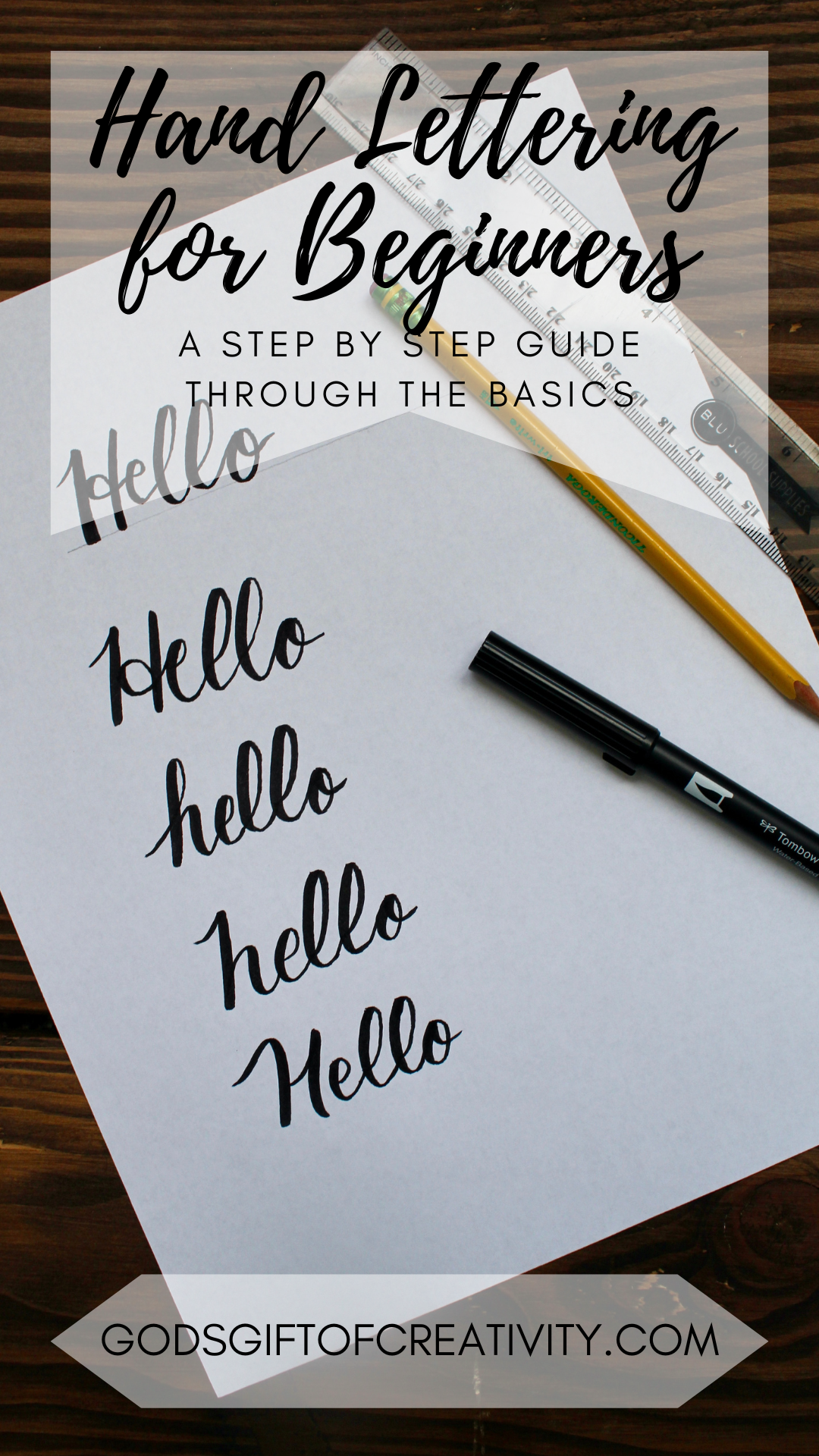
Hand lettering is a skill that can be used in so many creative and crafty ways! It is the perfect art to know when decorating with handmade signs or embellishing crafts with beautiful words.

Growing up, my sisters and I were homeschooled, and we learned and practiced cursive every day. We were required to use it for all of our writing and language arts assignments. Even though I don’t write in cursive very often anymore, I do love that this skill has helped me as I have learned how to hand letter.
Hand lettering is a fun and creative way for anyone to express themselves. You do not need to have a lot of special supplies or prior skills to learn either. It is a quick and easy way to add a creative outlet into your life without a large investment on the front end. You can decide how much you want to invest both in time and money as you go.
What is the difference between hand lettering and calligraphy?
Hand lettering is a simple way of writing that uses markers or brush pens and relies more on hand positioning and pressure to create beautiful words. Calligraphy is also a style of writing that uses similar techniques, but it requires specialized pens as well to create the desired effects.

Do I need to know cursive to hand letter?
You do not need to know how to write in cursive in order to hand letter well. However, it will take a few skills that I’ve learned through writing in cursive to help you be successful. The most important ones are:
- Situate your paper so it is pointed at a 45 degree angle when writing. (This creates the slanted letters you see when reading cursive.)
- Use smooth movements to create the best flow.
- Practice often to really grow in your skill.
While these are all great tips that have helped me, you will need a few more specific directions in order to hand letter well. Let’s start with the basics of what you need.
Hand Lettering Supplies:

The basic supplies for hand lettering are:
- Paper: Paper is an important part of the hand lettering process. Having a high quality, smooth paper is preferred when you are ready to invest more money into this hobby. However, I have also practiced on regular printer paper as well. If you are just getting into this, I suggest starting with the printer paper and working up to better paper from there.
- Pens: Pens are an equally important part of the hand lettering supply list. However, you can use a lot of different types of pens and be really successful. For brush pens, I have found that it is worthwhile to work with a higher quality pen over the cheaper options. I have also used basic colored markers though and been just as successful.
- Pencil & Ruler (optional): If you are wanting to write in perfect lines, then you may want to sketch out a line to practice on using a ruler and pencil.
What I love about hand lettering is that you don’t have to invest lots of money right away. If you just want to try it out first, then work with some printer paper and a marker to get started.
How to Hand Letter for Beginners:
As you practice hand lettering, you will need to remember these tips:
- Apply more pressure on the down strokes of a letter.
- Apply less pressure on the upstrokes of a letter.
- Try to keep your utensil at a 45 degree angle in your hand when writing.
- Go slow and take your time. You can lift up between letter marks to help reset when needed.


When you are ready to start hand lettering, you will need to:
- Grab your supplies.
- Use a pencil and ruler to mark out straight lines for you (if you desire).
- Tilt your paper so that it is slanted at about 45 degrees (check picture).
- Decide what word, letter, number, or shape you want to write.
- Practice several times, and be creative!

Because hand lettering is a skill, it will take some time for you to grow in your ability. Remember that it is a creative endeavor, and try not to get frustrated when things do not look as you want them to on your first few tries. Just keep practicing, and over time, you’ll get better and better!
Want creative ideas straight to your inbox? Sign up now!
Ideas for How to Practice Hand Lettering:
Sometimes it is difficult to come up with new ideas for what to write when you are practicing your hand lettering. I have come up with a few options for what you can write for practice:
- Favorite Verses or Quotes
- Family Names
- Pet Names
- Days of the Week
- Months
- Holidays
- Book Titles
- Movie Titles
- Favorite Characters (Books, Movies, Shows, etc.)
- Seasons
- Anniversaries
- Birthdays
- Planner Decorations
- Favorite Foods & Drinks
- Favorite Signs in your Home
- More!
There are so many options of what you could hand letter! What I love about this skill is that it can be used to embellish other crafts and decor all over my home. However, I use it most often in my bullet journal planner and on my DIY Dry Erase Calendar as a way to make these staples in my home more beautiful and fun. What would you use it for?
I hope this beginner’s guide to hand lettering is helpful for you and gets you started on the basics of hand lettering. Don’t forget to save it and come back later as you need!
I hope you enjoyed this blog post! Please like and subscribe to my blog if you would like to see more content like this, and share with others! If you want to keep up with me on Instagram or Facebook, you can find me @godsgiftofcreativity on either platform.
Thanks for creating with me!
-Chelsey
Hi there! I’m Chelsey!
Welcome to my blog God’s Gift of Creativity! Join me as I share my love for crochet, crafts, and cooking and show you how you can do it too!


Leave a Reply